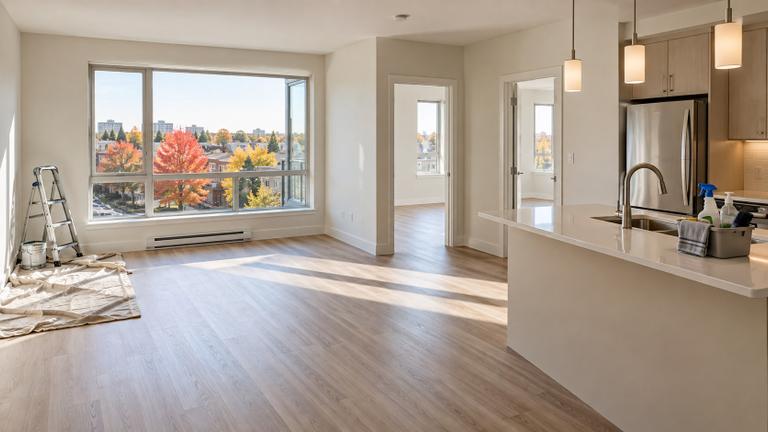
A vacant unit costs money every day it sits, and most of that cost is not the work - it is the waiting. Waiting on a quote. Waiting on the painter who promised Tuesday. Waiting on a cleaner who cannot get in because the locks were rekeyed that morning. A useful rental unit turnover checklist is really a scheduling document: it says what happens on which day, who is on site, and what has to be finished before the next trade can start. Seven days is realistic for a standard one- or two-bedroom Canadian suite with ordinary wear, and here is how that week actually runs.
Start the turn before the tenant leaves
The seven-day clock starts when you get the keys, but the week is won or lost during the notice period. Your rental unit turnover checklist should begin the day notice is given, not the day the suite empties.
Once a tenant gives proper notice you know your date, so use it. Most provinces and territories let a landlord enter to show a unit with written notice, commonly 24 hours, though the exact requirement and permitted hours vary - check your provincial tenancy legislation, not what worked in your last province. Showing while the suite is occupied means applications are in hand before it is even vacant.
Also use the notice period to:
- Walk the unit 10 to 14 days early so you scope real work instead of guessing, and confirm what the tenant is taking (the window AC unit, the microwave they installed themselves).
- Provisionally book trades. Painters and cleaners hold dates for property managers who book ahead, and lose patience with the ones who call the morning of.
- Check building restrictions. In a condo, elevator bookings, move-in windows and contractor insurance rules can quietly add three days.
Keep utilities in your name through the vacancy
If the power or gas goes off between tenants in January, you are not turning a unit, you are thawing pipes and drying drywall. Set up a landlord continuous-service agreement so accounts revert to you automatically when a tenant closes theirs. Trades also need heat and light to work, and paint will not cure properly in a cold suite.
Day 1: Move-out inspection and a locked scope
Inspect the day you get the keys, with the move-in condition report and photos open beside you.
The rules differ meaningfully across the country. British Columbia requires move-in and move-out condition inspection reports and ties deposit rights to completing them. Ontario allows a rent deposit but not a damage deposit, so recovering damage there is a tribunal claim, not a deduction. Quebec runs its own process through the Tribunal administratif du logement, and its July 1 moving rush squeezes trade availability province-wide every year.
Then write the scope the same day: one document, room by room, with photos, sorted into repair, paint, floor, clean, replace. Anything you discover after Day 1 is what turns a seven-day turnover into a fourteen-day one.
Day 2: Strip-out, disposal and access control
- Rekey or change the locks and set up key control. A lockbox with a code you reset at the end of the turn beats handing out four sets of keys.
- Remove everything abandoned and book bulky item disposal early. Municipal pickup schedules and fees vary widely, and a fridge parked on the balcony blocks the flooring crew.
This is also the day to price the scope if you do not have a standing rate card. Platforms like PlanaJob let property managers post the job once and compare quotes from vetted contractors instead of chasing three phone calls, which matters most when you need a painter locked for Thursday.
Days 3 and 4: Repairs first, paint second
Order matters more than speed. Paint over unfinished drywall and you pay for the paint twice.
Repairs
Drywall patching, door and cabinet hardware, blinds, tub and tile caulking, taps and drains, plus everything the inspection flagged. Keep licensed work licensed: electrical beyond a like-for-like fixture swap needs a qualified electrician working to your provincial authority's requirements, and gas connections need a licensed gas fitter. A failed inspection or an insurance denial costs far more than the labour you saved.
While the suite is empty, handle what nobody thinks about until it fails: furnace or HRV filter, dryer vent, baseboard heater covers, bathroom exhaust fan.
Paint
Standardize across the portfolio. One ceiling white, one wall colour, one trim paint, on a spec sheet you hand every painter. It is the single biggest accelerator in a turn: no colour matching, no sample pots, no mismatched touch-ups.
Day 5: Floors, appliances and the safety pass
Flooring goes in after paint. Appliances come back, get levelled, get tested. Then run a documented safety pass:
- Test every smoke alarm and carbon monoxide alarm, and confirm placement meets current provincial and municipal requirements. CO alarm rules in particular depend on fuel-burning appliances and attached garages.
- Check alarm expiry dates, not just batteries. Sealed ten-year units age out and must be replaced outright.
- Confirm window locks, any required window opening control devices, guards, railings and door hardware are sound.
- Log it with dated photos. If a dispute or insurance question lands, the log is your answer.
For fall and winter turns, add drained exterior taps, working heat tracing, replaced weatherstripping and cleared walkways.
Day 6: Deep clean and the second walk
Book a professional clean, not a tidy: appliance interiors, inside cabinets and drawers, window tracks, baseboards, light fixtures and vents.
Then walk it yourself in morning light. What loses you a tenant on a viewing is almost always small - a sticking patio door, a burned-out pot light, an exhaust fan that sounds like a jet. Build the punch list and give a handyman two hours on Day 7.
Day 7: Photos, listing live, keys ready
Photograph the suite empty, clean and bright, get the lease package ready, put the listing up and start booking viewings. If you showed during the notice period, this is where you convert an application you already have. Keys, fobs, parking passes and building access go across with a signed condition inspection report - the document that protects you at the far end of the next tenancy.
The seven-day rental unit turnover checklist at a glance
- Day 1: Move-out inspection, photos, scope locked, trades confirmed.
- Day 2: Rekey, strip-out, disposal booked, quotes compared.
- Day 3: Repairs - drywall, plumbing, licensed electrical, hardware, filters and vents.
- Day 4: Paint - ceilings, walls and trim to your portfolio spec.
- Day 5: Flooring, appliances, documented safety pass, seasonal items.
- Day 6: Deep clean, second walk, punch list.
- Day 7: Punch list cleared, photos taken, listing live, keys ready.
Pin this rental unit turnover checklist where your coordinators can see it. Most turns run long because steps happened in the wrong order, not because anyone was slow. More operations playbooks live on the PlanaJob blog.
Where seven-day turns actually break
Even a tight rental unit turnover checklist needs a plan for three things.
Scope creep after Day 1. Subfloor damage under the laminate, a slow leak behind the vanity. Build one contingency day into the week rather than pretending it will not happen.
A trade that does not show. You need a bench, not a favourite. Trade businesses change hands more often than property managers expect, enough to support a market of their own, as sites like ContractorExit show. The crew you relied on for six years can disappear between turns.
Pricing surprises. A one-day painting job across town costs a painter more than the hours suggest once mobilization and small-job overhead are counted. Understanding how trades price work makes you a better client and gets you better dates; Construction Arbitrage is a good read on the business side of contracting.
Make the sequencing somebody else's job
The hardest part of a fast turn is not any single trade, it is the handoffs. A rental unit turnover checklist only works if crews arrive in the right order, on the right day, with access sorted. PlanaJob sequences cleaners, painters and handymen so turnovers do not stall waiting on the next crew, and every contractor is vetted first. See how it works for property managers in Canada, or create an account and post your next turn as a test run.
FAQ
How long should a unit turnover take in Canada?
Seven days is realistic for a standard suite with normal wear, provided the scope is locked on Day 1 and trades were booked during the notice period. Units needing full flooring replacement, ordered appliances or condo elevator bookings usually run 10 to 14 days. Longer than that is normally a scheduling problem, not a construction one.
Can I charge a departing tenant for cleaning and repairs?
It depends on your province or territory. Some jurisdictions allow a security deposit that can be applied to damage; others, Ontario among them, do not permit a damage deposit at all, so recovery runs through the tenancy tribunal. Normal wear and tear is never chargeable, and condition reports with dated photos are what make a claim survivable.
What should be on a rental unit turnover checklist for winter turns?
Add utility and heat continuity, drained exterior taps, working heat tracing, fresh weatherstripping, furnace filter and vent checks, and cleared walkways for viewings. Cold slows paint curing and flooring acclimatization, so give those trades an extra day and keep the suite heated throughout, not only on work days.