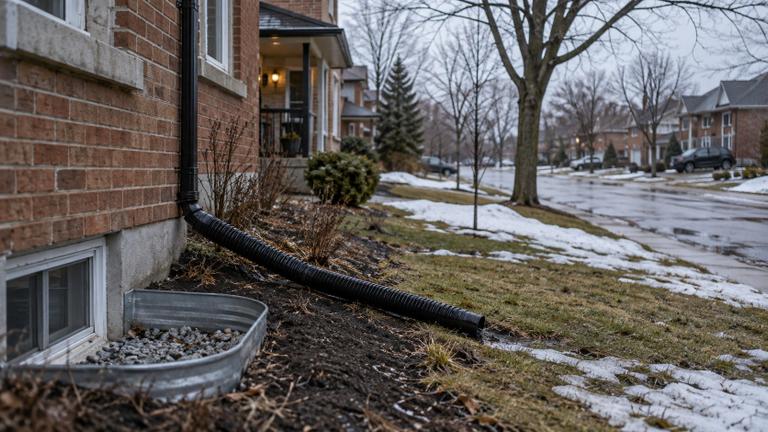
Water in a basement unit is almost never one problem. It is three, and each needs a different fix: surface water that should have drained away from the foundation, groundwater pushing through the walls and slab, and sanitary sewer backup rising through the floor drain. If you manage rental property, the fastest way to prevent basement flooding in Canada is to stop treating them as a single line on the maintenance budget and start diagnosing which one you actually have. Regrading a side yard does nothing for a sewer backup. A backwater valve does nothing for meltwater running down a driveway into a walkout. Here is how to tell them apart, what to install, and how to get your municipality to cover part of the cost.
Read the Evidence Before You Spend a Dollar
Every plan to prevent basement flooding in Canada should start with evidence, not equipment. Ask the tenant when the water appeared, where it showed up first, and what the weather was doing. Then look for the tells:
- Water at the floor drain, in a basement shower or toilet, during or just after heavy rain, often with a sewage smell: sanitary or combined sewer backup.
- Water running down a foundation wall, pooling in a window well, or coming under a walkout door: surface water and grading.
- Damp patches creeping out from the cove joint where the floor meets the wall, worst during spring melt: groundwater and hydrostatic pressure.
- Clear water with no rain at all: a supply line, water heater, or failed washing machine hose.
Photograph everything, note the weather that day, and file it in the unit record. Two documented events will tell you more about the cause than any single inspection.
Grading and Roof Drainage: the Cheapest Wins
The ten-minute grading check
Walk the full perimeter during or right after a hard rain, not on a dry Tuesday. You are looking for ground that falls away from the building. The common rule of thumb is roughly 150 mm (6 in) of drop in the first 3 m (10 ft), though your municipality's lot grading bylaw is the authority and many cities specify a minimum slope.
The usual culprits: backfill over the foundation that has settled into a trench, garden beds dug down into a bowl against the wall, patio slabs that have heaved and now tip back toward the house, and driveways pitched toward a below-grade entrance. Fix it with compacted clay-rich fill placed in layers, not loose topsoil and mulch, which act like a sponge against the wall. Keep the finished grade well below siding, sill plate and weep holes so you do not trade a wet basement for rotted framing.
Eavestroughs, downspouts and the winter problem
- Clean eavestroughs twice a year, after leaf drop and again in spring. Overflow dumps concentrated runoff exactly where you least want it.
- Extend downspouts at least 1.8 m (6 ft) from the foundation, onto ground that slopes away, and never toward a neighbour's lot line.
- Disconnect downspouts from the sewer where your city requires it. Toronto, for example, has a mandatory downspout disconnection bylaw with limited exemptions. A downspout piped into a combined sewer is loading the same pipe that backs up into your basement.
- Before winter, pull hose extensions that will get buried and snapped. Through winter, keep snow piles off the foundation and clear the catch basin and sump discharge point before a thaw.
Spring is the hardest test in most of the country. Frozen ground sheds meltwater almost like pavement, so a lot that drains fine in July can send a sheet of water at the foundation in March.
Backwater Valves, Sump Pumps and the Sewer Side
What a backwater valve actually does
A mainline backwater valve sits in the sanitary lateral, usually in a pit cut into the basement floor with a clear access cover. The flap stays open in normal use and closes when sewage tries to flow back toward the house. Normally open mainline valves are what provincial plumbing codes and municipal programs generally expect, and in nearly every municipality the work requires a permit, a licensed plumber and an inspection.
Two things get missed on almost every job. First, while the valve is closed nothing can leave the building either, so tenants should not run laundry, dishwashers or long showers during a major storm. Put that in the tenant handbook and on a card by the laundry. Second, if the weeping tile still drains into the sanitary or combined lateral, which is common in older housing stock, a closed valve traps foundation drainage with nowhere to go. That is why programs usually pair the valve with a sump pit, a pump and severance of the foundation drain. Have the lateral camera-scoped before you buy anything.
One more distinction: a backwater valve is not a backflow preventer, which protects potable water from cross-connection. Different device, different purpose, and quotes sometimes confuse them.
Sump pumps, backup power and frozen lines
- Specify a battery or water-powered backup. The storms that fill a pit are the storms that cut the power.
- Discharge to daylight, well away from the foundation, never into the sanitary sewer, and never across a walkway where it will glaze over.
- Frozen discharge lines are a leading cause of winter failure. Use a larger diameter line with a relief or ice guard fitting and remove summer hose extensions in the fall.
- Fit a check valve and a sealed pit lid, and add a second pump on a higher float in high-risk buildings.
- Put a Wi-Fi water sensor in the pit and another on the floor near the drain, then test quarterly with a pail of water and log it.
How to Prevent Basement Flooding in Canada with Municipal Rebates
Many municipalities and water utilities fund exactly this work. Toronto, Ottawa, Winnipeg and Edmonton have all run subsidy programs covering backwater valves, sump pumps and drain severance. Amounts, eligible items and deadlines change often, so confirm current terms with the municipality or utility before you scope the job rather than relying on a figure someone quoted last year.
What these programs tend to have in common:
- Apply first. Many require an approved application, sometimes with a pre-inspection, before work starts. Receipts for completed work are often refused.
- Use a licensed plumber and pull the permit. Owner-installed or unpermitted work is generally ineligible.
- Expect a narrow scope. Valves, sump pumps and foundation drain disconnection usually qualify; waterproofing membranes, landscaping and finished basement restoration usually do not.
- Book the post-work inspection and leave the access cover reachable.
- Sort the owner paperwork early. Applications go in the registered owner's name with proof of ownership, and chasing that authorization is the most common source of delay.
- Check rental eligibility. Some programs cover tenanted properties and small multiplexes, others cap unit counts. Confirm before you promise an owner a rebate.
Quotes for the same valve vary because the scope does: interior pit versus exterior excavation, concrete cutting and reinstatement, depth and access. For a feel for how trades build up excavation and restoration pricing, the breakdowns on Construction Arbitrage are a useful primer. Platforms like PlanaJob let property managers compare quotes from vetted contractors side by side, so you can see which line items actually differ.
Make It a Routine, Not a Project
Efforts to prevent basement flooding in Canada fail more often through neglect than bad specification. Build the checks into the seasonal calendar:
- Late fall: clean eavestroughs, remove hose extensions, service the valve, test the pump and its backup.
- Winter: keep snow off the foundation and clear the discharge point and catch basins before a forecast thaw.
- Spring: walk the perimeter in the rain, check window wells and covers, retest the pump.
- Summer: repair grading and beds while the ground is workable, and scope the lateral if there is any backup history.
Tell tenants three things: do not store anything on the valve cover or sump lid, report gurgling floor drains immediately because that noise usually precedes a backup, and know how to reach emergency maintenance.
Insurance and Records
In Canada, sewer backup and overland water are normally separate optional endorsements rather than standard coverage, and insurers increasingly ask whether protective plumbing is installed. A landlord policy covers the building, not the tenant's belongings, so require tenant insurance in the lease and remind tenants at renewal. Keep permits, inspection reports, invoices, rebate approvals and photos in the unit file. That record is what settles the argument about cause after a loss.
Getting the Work Booked
Plumbers on PlanaJob install backwater valves, fit sump systems with backup power and handle the municipal rebate paperwork, so the permit, inspection and application are not left sitting on your desk. Post the job at planajob.com/signup with your photos and backup history attached. If you run a portfolio, the tools for property managers keep the work and its documentation tied to each unit, and there are more seasonal maintenance walkthroughs on the PlanaJob blog.
FAQ
Do I need a permit to install a backwater valve?
In almost every Canadian municipality, yes. It is regulated plumbing work requiring a permit, a licensed plumber and an inspection. Subsidy programs require the same, so unpermitted work usually costs you the rebate as well as the sign-off.
How often should a backwater valve be serviced?
At least once a year, twice on properties with mature trees or a history of grease and debris. Open the cover, clear the flap and seat, confirm the float moves freely, and check for anything wedged in the body. Keep the access cover exposed, and never let a basement finishing job bury it.
Does a backwater valve stop every kind of basement flooding?
No. It stops sewage travelling back up the lateral. It does nothing about surface water, foundation seepage or a burst supply line, which is why grading, roof drainage and a working sump belong in the same plan.