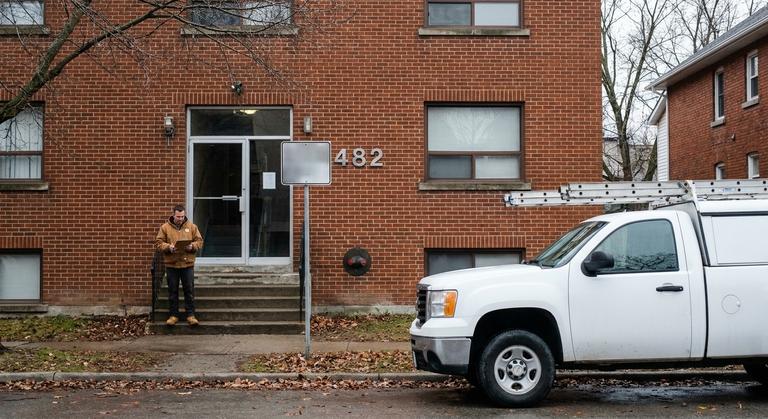
A fire inspector will not care that your building went up in 1962, that the previous owner passed an inspection, or that you only have six units. Ontario Fire Code apartment requirements apply to existing buildings regardless of age, and the retrofit provisions exist precisely to pull older rental stock up to a workable life safety standard. If you own or manage a triplex, a house with a legal basement suite, or a three-storey walk-up, you carry the same core obligations as the owner of a downtown tower. You just have fewer systems, less staff and nobody on site to catch a wedged fire door. This is the checklist a fire prevention officer will realistically work through, and what you should be able to hand over within about five minutes of them arriving.
Fire Code or Building Code? Know Which One Is Knocking
The Ontario Fire Code (O. Reg. 213/07) sits under the Fire Protection and Prevention Act, 1997. It governs how a building is maintained, operated and used. The Ontario Building Code governs how it was constructed. Different documents, different enforcement: your municipal building department deals with permits and construction, while your local fire department enforces the Fire Code through a fire prevention officer who can inspect, issue an order with a compliance date, and prosecute under the FPPA if the order is ignored.
The part that catches small building owners out is retrofit. The Fire Code's retrofit provisions set a minimum standard for buildings that were entirely legal when built but no longer meet the current floor for suite separations, alarm coverage and exiting. "It was built that way" is not a defence. Most Ontario Fire Code apartment requirements affecting older small buildings live in these retrofit sections rather than in current construction standards. Which retrofit category applies depends on building height and the number of dwelling units, so before you spend a dollar, ask your fire prevention officer to confirm in writing which one covers your building. Guessing is how owners fund the wrong upgrade.
Delegating the work does not delegate the liability
The Fire Code places duties on the owner. Hiring a property manager, an agent or a part-time superintendent moves the work, not the responsibility, and orders get written to the owner of record. If you manage on someone else's behalf, spell the split out in the management agreement in plain language: who books the annual alarm inspection, who holds the records, who responds when an order lands.
One practical Ontario wrinkle: testing in-suite smoke and carbon monoxide alarms usually means entering the unit, and the Residential Tenancies Act requires 24 hours written notice with entry between 8 a.m. and 8 p.m. unless it is an emergency. Batch it. Serve notice on the whole building for the same morning once a year and clear every suite in one pass.
The Owner's Checklist for Ontario Fire Code Apartment Requirements
Paperwork you should be able to produce on the spot
- An approved fire safety plan. Small residential buildings are not exempt because they are small. The plan has to be approved by the chief fire official, kept somewhere the fire department can reach it, and reviewed regularly.
- Records of every inspection, test and maintenance activity: alarm system, extinguishers, emergency lighting, doors, fuel-fired appliances. Keep them for the retention period the Fire Code sets out, and expect an officer to ask for at least the past couple of years.
- Current contact details for the owner and for a responsible person who can attend the building.
- Emergency procedures posted for occupants where your plan requires them.
Detection
- Smoke alarms on every storey of each dwelling unit and outside sleeping areas.
- Carbon monoxide alarms adjacent to sleeping areas where the building has a fuel-fired appliance, a fireplace or an attached garage. Buildings with more suites and dedicated service rooms carry additional requirements around those rooms and the suites next to them.
- Alarms replaced by the expiry date printed on the back of the unit. Sealed long-life lithium alarms cut both battery complaints and tampering.
- Tenants must not disable an alarm, but the duty to maintain it is yours. "The tenant took the battery out" will not get an order withdrawn.
Fire alarm system, if you have one
- Monthly checks by building staff plus annual inspection and testing to CAN/ULC-S536 by a qualified service company.
- Verification to CAN/ULC-S537 after installation or any alteration. Adding one device to an existing loop counts as an alteration.
- Keep the annual report listing deficiencies, and keep the follow-up invoice proving they were corrected. The report on its own is evidence you knew.
Exiting and fire separations
- Corridors, stairwells, landings and exterior exits kept clear. Bikes, strollers, boot trays and recycling bins are the everyday offenders.
- Self-closing devices on doors in fire separations, including suite doors onto a common corridor. Removed closers and wedged doors are written up constantly.
- Exit doors that open from the inside without a key or special knowledge.
- Exit signage illuminated, and emergency lighting function tested monthly and load tested annually for its full rated duration.
- Separations intact. Every cable, duct or pipe run through a rated wall or ceiling needs the penetration properly sealed, which is where a cheap internet install quietly becomes a deficiency.
Suppression equipment
- Portable extinguishers inspected monthly with the tag initialled, serviced annually by a qualified person, and sent for internal examination or hydrostatic testing at the intervals in the referenced standard.
- Sprinklers or standpipes, where present, inspected and tested to the referenced standard, with the fire department connection clear, capped and visible from the street.
- Control valves secured in the open position.
Mechanical, electrical and grounds
- Fuel-burning appliances serviced annually by a licensed technician. Fuel safety in Ontario falls under the TSSA; electrical work falls under the ESA and needs the right permits and certificates, not a handyman and a hope.
- Service and boiler rooms free of combustible storage. A furnace room is not a locker, no matter how many notices go up.
- Fire routes signed and passable, address numbers visible from the street, and snow and ice cleared from exit doors, fire routes and hydrants all winter. Blocked exterior exits after a storm are a genuinely Ontario failure mode and deserve a standing item on the winter list.
- Balcony barbecue and propane cylinder rules. Check your municipal bylaw and the provincial fuel rules separately, because they are not the same thing.
Turn the Checklist Into a Calendar
Nearly every one of the Ontario Fire Code apartment requirements above carries a frequency, and small portfolios fail on cadence rather than on knowledge. Put it on a schedule and the annual inspection stops being an event.
- Monthly: extinguisher visual checks, emergency lighting function test, alarm system checks, and a walk of every corridor, stairwell and service room.
- Quarterly: test every door in a fire separation for closing and latching, and check fire route access, signage and address visibility.
- Annually: fire alarm inspection and testing, extinguisher servicing, emergency lighting full-duration test, in-suite smoke and CO alarm checks, appliance servicing, fire safety plan review and staff training.
- Multi-year: extinguisher internal examination and hydrostatic testing, alarm panel and device end-of-life planning, alarm replacement by expiry date.
Treat the multi-year items as capital planning, not surprises. The same reserve discipline you apply to roofs and boilers belongs here, and there is useful reading on that kind of planning at Construction Arbitrage if you are building budgets across several small buildings.
What Inspectors Actually Write Up
Five items recur across small multi-residential buildings:
- No fire safety plan, or a plan written for a layout that has since been renovated.
- Storage in exits, service rooms and under stairs.
- In-suite smoke or CO alarms missing, expired or disconnected.
- Suite door closers removed and doors that no longer latch.
- Work that was done but never documented. From the inspector's side of the clipboard, no record means it did not happen.
When an Order Lands, Bundle the Work
Ontario Fire Code apartment requirements are enforced with deadlines, not suggestions, and the classic mistake is chasing deficiencies one trade at a time: an alarm technician this week, a door contractor next month, an electrician whenever someone calls back. Scope the whole order at once, get comparable quotes, and book the work in a single window so the re-inspection finds everything closed out.
That is the practical case for putting the full package out as one request. Platforms like PlanaJob let property managers compare quotes from vetted contractors for the alarm inspection, the door closers, the firestopping and the electrical corrections side by side instead of running five separate conversations. Line up your annual fire safety inspections and the deficiency repairs in one PlanaJob request, keep every quote and invoice in one place, and hand the paper trail straight to the fire prevention officer. If you look after Canadian rental property, create an account and have a look at the tools built for property managers. More Canadian compliance guides are on the PlanaJob blog.
One more thing worth watching: fire protection service companies change hands often, and small trade businesses get bought and sold regularly, as anyone following the trade business market will recognize. When your alarm contractor is acquired, your service history can walk out the door with them. Ask for a copy of every report as it is issued rather than trusting the vendor's filing cabinet.
FAQ
Do Ontario Fire Code apartment requirements apply to a duplex or a basement suite?
Yes. The Fire Code covers residential occupancies including two-unit dwellings, with their own retrofit provisions dealing with separations, alarms and a safe way out of the second suite. If the basement apartment was never permitted, you are likely facing Building Code and Fire Code issues at the same time, so get it reviewed before a tenant complaint or an insurance claim forces the question.
How often does a small apartment building get inspected?
There is no universal cycle for ordinary residential buildings. Many fire departments run a routine rotation, and virtually all of them will attend on a complaint, on a request from a purchaser or lender, and after any fire call. Assume this could be your year and keep the records current rather than reconstructing them under a deadline.
Who is responsible for smoke alarm batteries, the landlord or the tenant?
The owner is responsible for installing, testing and maintaining working alarms. Tenants must not disable or remove them and should report a fault. In practice, fitting sealed long-life alarms ends the argument, cuts callouts and makes the annual in-suite check considerably faster.