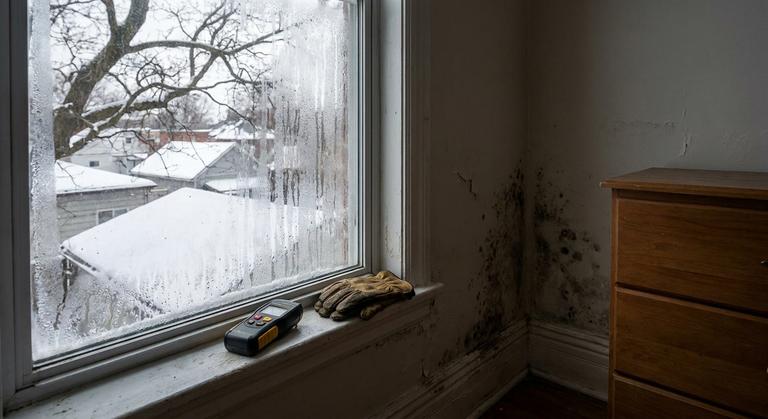
Search 'mould in rental property landlord responsibility Canada' the morning after a tenant emails you a photo of black spotting behind a bedroom dresser, and you will find a hundred pages that all say the same thing: fix it. What they rarely tell you is which level of government actually has teeth, why Health Canada's guidance matters more than a lab report, and how to scope the work so the invoice and the paper trail both survive a rent abatement hearing. This is the version written for people who manage Canadian buildings through a real winter.
Mould in Rental Property Landlord Responsibility Canada: What the Law Actually Says
There is no federal mould statute, and no province sets a numeric mould limit. Liability flows from the general repair and habitability duty written into each provincial and territorial residential tenancy law, and that duty exists whether or not the tenant complains.
- Ontario - the Residential Tenancies Act requires a landlord to keep the unit in a good state of repair, fit for habitation, and compliant with health, safety and housing standards. Tenants raise maintenance disputes at the Landlord and Tenant Board on a T6 application.
- British Columbia - the Residential Tenancy Act requires the landlord to maintain the property so it complies with health, safety and housing law and is suitable for occupation. Disputes go to the Residential Tenancy Branch.
- Quebec - the Civil Code obliges the landlord to deliver and maintain a dwelling fit for habitation. The Tribunal administratif du logement hears the file, and a tenant can seek authorization to deposit rent with the tribunal instead of paying you.
- Alberta - the Residential Tenancies Act sits beside the Minimum Housing and Health Standards made under the Public Health Act, which environmental public health officers enforce with their own orders.
Then there is the municipal layer, which usually moves faster than a tribunal. Property standards bylaws let an inspector issue a work order with a hard deadline. Toronto's RentSafeTO program covers apartment buildings of three or more storeys and 10 or more units, and Vancouver enforces a Standards of Maintenance By-law. An open bylaw order is also powerful evidence at a tenancy hearing, so treat an inspector's visit as a legal event rather than an annoyance.
The practical shape of mould in rental property landlord responsibility Canada-wide is this: adjudicators do not ask whether spore counts crossed a threshold. They ask whether there was a moisture source under your control, whether you knew or ought to have known, and whether you acted with reasonable promptness. Remedies run from repair orders to rent abatement, compensation for damaged belongings, and in serious cases the tenant's right to end the tenancy early.
What Health Canada Guidance Actually Says (and What It Does Not)
Health Canada treats indoor mould growth in a residential building as a potential health hazard regardless of species, and has not set an exposure limit. Two consequences follow, and both save money.
First, you generally do not need testing to justify acting. Health Canada does not recommend routine air sampling or species identification as the basis for a decision. Visible growth, a musty odour and evidence of moisture are enough to trigger work. Air sampling earns its keep in clearance testing or a contested file, not as a first step. Second, the fix is moisture, not chemistry. Canada Mortgage and Housing Corporation's clean-up guidance steers away from bleach on porous materials: you dry the assembly, remove what cannot be cleaned, and clean what can.
The clean-up framing scales by area. A patch smaller than roughly one square metre is a clean-and-repair job for trained maintenance staff with proper respiratory protection. Anything beyond about three square metres belongs to a remediation contractor working under containment. In between, use judgement based on the occupant's health, the material involved, and whether the wall cavity is wet.
On prevention, the advice is unglamorous. Keep indoor relative humidity roughly in the 30 to 50 per cent band, and push it toward the low end in cold weather so it does not condense on glass and exterior walls. In a Canadian January, 50 per cent indoor humidity means water running down the windows and damp drywall behind the furniture. Landlord responsibility for mould in a rental property in Canada starts with humidity and envelope control, long before anyone books a lab.
Why the Tenant Lifestyle Defence Usually Fails
Every property manager has heard it from an owner: they dry laundry indoors, they never crack a window. Sometimes that genuinely contributes. It rarely shifts landlord responsibility for mould in a rental property on its own, because the first question an adjudicator asks is whether the building gave the tenant a fair chance.
Before you send a letter about occupant behaviour, work the building side:
- Bathroom exhaust fan present, actually moving air, and ducted outdoors rather than dumping into the attic. This is the most common single finding in older low-rise stock.
- Kitchen range hood vented outside instead of recirculating through a charcoal filter.
- HRV commissioned and running in newer airtight buildings, filters clean, balanced rather than throttled to silent.
- Attic bypasses sealed and insulation at full depth, so you are not manufacturing ice damming and top-floor ceiling stains every February.
- Rim joists and cold corners insulated. A thermal camera finds the cold spot behind the mould in about ten minutes.
- Lot grading, downspout extensions, eavestroughs, weeping tile and sump pump condition, checked before spring melt rather than during it.
- Window and door perimeter seals, and whether you are still running original single-glazed aluminum units that will sweat no matter how the tenant lives.
Tenants do owe ordinary cleanliness and reasonable use of the ventilation you provide, and it is worth putting humidity guidance in the move-in package. That is mitigation. It is not a defence when the fan terminates in the attic.
The Remediation Sequence That Holds Up
This is where mould in rental property landlord responsibility Canada cases are won or lost - not on the size of the invoice, but on the order of operations and the records behind it.
- Acknowledge in writing, fast. Date-stamped reply with a proposed attendance date. Silence is what gets abatements ordered.
- Attend and measure. Moisture meter readings on affected and control areas, room temperature and relative humidity, thermal images, dated photos. Entry rules still apply - in most provinces that means 24 hours written notice and daytime hours only.
- Find the water first. Roof, envelope, plumbing, condensation or groundwater. Remediation before the source is fixed is money burned twice.
- Check for designated substances before anyone cuts. In pre-1990 buildings, drywall joint compound, textured ceilings and vermiculite insulation can contain asbestos. Ontario has a dedicated asbestos regulation for construction and repair operations, and other provinces impose equivalent duties through their occupational health and safety regimes. Your contractor needs the survey, not a shrug.
- Scope to the condition. Containment, negative air with HEPA filtration, controlled removal of porous materials, then HEPA vacuuming and damp wiping of what stays. Fogging a biocide over wet drywall is not remediation.
- Verify before you rebuild. Visual inspection, moisture content back to the dry standard for that material, and third-party clearance on larger jobs. Sign-off before close-up, every time.
- Re-inspect next heating season. Condensation problems are seasonal. A July clearance proves far less than a January follow-up.
Choosing and Comparing Remediation Contractors
Ask for all of this in writing before you award the work:
- IICRC certification, with technicians holding the applicable water damage restoration and mould remediation designations, and a scope written against the S520 standard.
- A current clearance letter from the provincial workers' compensation board - WSIB, WorkSafeBC, WCB Alberta and so on - plus commercial general liability and pollution liability where the firm carries it.
- A scope that names containment level, disposal method and post-remediation verification, not a lump sum for "mould removal".
- Moisture readings in the report, before and after, on named materials.
Quote spreads on identical scopes are often wide, mostly because firms price containment, drying equipment days and crew time very differently; strategy write-ups such as constructionarbitrage.com are a useful window into how trades actually build those numbers. Platforms like PlanaJob help on the buying side by letting property managers compare quotes from vetted contractors side by side instead of chasing three callbacks.
Documentation, Insurance and the Owner Conversation
Habitational and commercial property policies in Canada commonly respond to sudden and accidental water damage while excluding or sublimiting gradual seepage and fungi. That distinction is why the plumbing failure gets covered and the six-month roof leak does not. Report the water event early, keep photos of the material before it goes in the bin, and do not let an owner delay work while coverage is argued - mould in a rental property remains the landlord's responsibility in Canada even when the insurer declines.
Keep one file per unit containing the complaint, your written reply, entry notices, dated photos, moisture data, the scope, invoices, clearance documentation and the follow-up inspection. That file is your defence, your insurance claim and your owner report in one.
When you are ready to put real contractors behind the process, you can post the scope and book IICRC-certified mould remediation pros through PlanaJob's vetted network. See how the workflow fits Canadian property managers, create an account to raise your first job, and browse more compliance guides on the PlanaJob blog.
FAQ
Can a tenant withhold rent in Canada over mould?
In most provinces, no. Rent withholding is not a recognized self-help remedy, and a tenant who stops paying usually exposes themselves to a termination application. The proper route is a tribunal application for a repair order, rent abatement or damages. Quebec is the notable variation: a tenant can apply to the Tribunal administratif du logement for authorization to deposit rent with the tribunal while a dispute is live.
Do I need a mould test before starting remediation?
Generally not. Health Canada does not recommend routine air sampling or species identification as the trigger for action, so visible growth plus a moisture source is enough to justify the work. Testing is worth paying for in two situations: post-remediation clearance on a large job, and a contested file where you expect the extent of the problem to be argued in front of an adjudicator.
What if the tenant genuinely caused the moisture?
You still have to repair the unit. Habitability duties are not conditional on fault. Once the building is safe and dry, you can pursue the cost of damage caused by a tenant's negligence or wilful act through the tenancy tribunal, but you need evidence: your ventilation was functional, humidity guidance was given in writing, and the damage pattern points to occupant use rather than a building defect. Fix first, recover second.