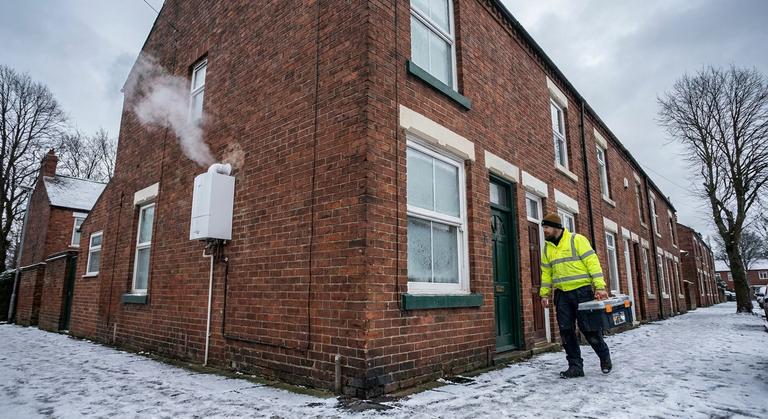
Ask ten property managers what temperature a rental unit legally needs to hit in January and you will get ten different answers - and several of them will be quoting the wrong city's rules. Minimum heat bylaw requirements for rentals in Canada are set municipally and provincially, not federally, which means the number on the thermostat that keeps you compliant in Toronto is not necessarily the same one that keeps you compliant in Winnipeg, Vancouver or Montreal. If you manage doors in more than one city, or you have just taken on a building in a new municipality, this is one of the first compliance items to pin down before the cold weather arrives, because heat complaints escalate faster than almost any other maintenance issue.
How Minimum Heat Bylaw Rules Work Across Canada
There are usually three layers of law in play, and they stack rather than replace each other:
- Provincial residential tenancy legislation. Every province requires landlords to provide vital or essential services, and heat is always on that list. Ontario's Residential Tenancies Act, BC's Residential Tenancy Act and Manitoba's Residential Tenancies Act all treat withholding or failing to supply adequate heat as a serious breach, regardless of what any municipal bylaw says.
- Provincial housing and health standards. Some provinces set a baseline temperature or heating capability in their housing standards. Alberta, for example, addresses heating capability through its Minimum Housing and Health Standards, which apply province-wide rather than city by city.
- Municipal property standards or maintenance bylaws. This is where the specific numbers usually live. Cities set a minimum indoor temperature, sometimes a heating season during which it applies, and an enforcement mechanism - typically a property standards order backed by fines.
The practical takeaway: you comply with the strictest layer that applies to your unit. A furnace that satisfies the province but cannot hold the city's stated minimum on a cold snap still puts you offside.
Toronto
Toronto is the clearest example in the country. Under the city's municipal code, rental units must be kept at a minimum of 21 degrees Celsius, and since the city removed the old seasonal window, that standard applies year-round rather than only during a defined heating season. Enforcement runs through the city's bylaw officers and, for apartment buildings, the RentSafeTO program. A tenant complaint can trigger an inspection, an inspection can trigger an order, and an unresolved order becomes a matter of public record attached to your building.
Winnipeg
Winnipeg regulates indoor temperature through its neighbourhood liveability and property standards framework, and the figure commonly cited for occupied rental units is 21 degrees Celsius. Given Winnipeg winters, the margin for error is thin: a furnace that limps along at minus 10 can fail outright at minus 35, which is exactly when inspectors receive the most complaints. Confirm the current bylaw wording with the City of Winnipeg directly, because maintenance bylaws get amended and consolidated more often than most managers realize.
Vancouver, Montreal and everywhere else
Vancouver addresses heating through its Standards of Maintenance By-law, which requires heating systems capable of maintaining a specified temperature in habitable rooms. Montreal's requirements vary because boroughs carry their own maintenance regulations on top of Quebec's civil law framework for leases, which obliges landlords to deliver a dwelling fit for habitation. In Alberta, Calgary and Edmonton landlords look primarily to the provincial standards mentioned above.
The pattern across the country is consistent even where the numbers differ slightly: most Canadian cities land somewhere around 20 to 22 degrees Celsius for occupied living space. But 'somewhere around' is not a compliance position. For each municipality where you hold units, pull the actual bylaw text, note the temperature, note whether it applies year-round or seasonally, and note who enforces it.
What Happens When a Unit Falls Below the Minimum
A minimum heat bylaw violation rarely stays a quiet maintenance ticket. The usual escalation path looks like this:
- Tenant complaint to the city. Most cities let tenants report inadequate heat by phone or online, and heat complaints are typically prioritized in winter.
- Inspection and order. A bylaw or property standards officer measures the temperature, and if the unit is below the minimum, issues an order to remedy with a deadline.
- Fines and charges. Ignore the order and the municipality can prosecute under the bylaw, with fines that make a furnace repair look cheap.
- Tenancy board applications. In parallel, tenants can apply to their provincial tenancy tribunal - the Landlord and Tenant Board in Ontario, the Residential Tenancy Branch in BC, the Residential Tenancies Branch in Manitoba - seeking rent abatements or repair orders for loss of a vital service.
- Reputational cost. In cities with public building-rating programs, orders follow the building, and prospective tenants increasingly check.
One point that surprises newer landlords: you generally cannot contract out of this. A lease clause saying the tenant is responsible for heat does not relieve you of the obligation to ensure the heating system can actually deliver the bylaw minimum. And you can never shut off heat to pressure a tenant over arrears - in every province that is treated as withholding a vital service and carries its own penalties.
Building a Heat Compliance Routine Before the Cold Hits
Managers who never see a heat order tend to run the same simple playbook every fall:
- September: service the plant. Book furnace, boiler and heat pump servicing before the first cold snap, when good techs still have open calendars.
- Confirm the bylaw number for every city in your portfolio. Keep a one-page reference: city, minimum temperature, seasonal or year-round, enforcement body, complaint line.
- Log temperatures when you attend units. A dated thermometer reading in your notes is worth a great deal if a dispute reaches a tribunal months later.
- Triage heat calls as emergencies from roughly October to April. A no-heat call in a Winnipeg February is a same-day problem, not a next-week problem.
- Line up backup capacity. Know where you can source portable electric heaters safely and quickly if a repair will take more than a day, and document that you provided them.
- Keep a bench of furnace techs, not one favourite. Your regular HVAC contractor is busiest during exactly the week you need them most.
That last point is where most portfolios are fragile. If your only heating contractor is booked solid during a cold snap, you are exposed. Platforms like PlanaJob let property managers post a job once and compare quotes from vetted contractors, which is a practical way to build that bench before winter rather than during it. You can see how the workflow fits a multi-property operation on the PlanaJob property managers page.
It is also worth understanding the other side of the market: heating contractors deliberately structure their businesses around winter emergency demand, and there is a good discussion of how trade businesses price and plan for seasonal peaks over at Construction Arbitrage. Knowing how your contractors think about winter capacity helps you negotiate standing arrangements that actually hold when the temperature drops.
When the Furnace Fails Mid-January
Even a well-maintained system fails eventually, and the bylaw clock does not pause while you wait for parts. When a no-heat call comes in during deep winter, the sequence that protects both your tenants and your compliance position is: acknowledge the tenant immediately and in writing, get a qualified tech attending the same day, provide safe temporary heat if the fix will run past twenty-four hours, and document every step with times and photos. What turns a breakdown into a bylaw order is usually not the failure itself - it is three days of silence while a tenant sits in a cold unit and dials the city instead.
Speed of dispatch is the whole game. If you want same-week furnace techs quoting on your jobs before a heat complaint turns into a property standards order, you can create a free PlanaJob account and have your buildings and preferred trades set up well before the next cold snap. For more compliance walk-throughs like this one, the PlanaJob blog covers the maintenance and legal topics Canadian property managers ask about most.
FAQ
What is the minimum heat requirement for a rental in Toronto?
Toronto's municipal code requires landlords to maintain a minimum indoor temperature of 21 degrees Celsius in rental units, and the requirement applies year-round rather than only during a heating season. Tenants can report violations to the city, and bylaw officers can inspect and issue orders against the property.
Is there one minimum heat bylaw for rentals across Canada?
No. There is no single national standard - the minimum heat bylaw applying to your rental in Canada depends on the municipality, layered on top of provincial tenancy law that requires heat as a vital service. Most cities set their minimums in the 20 to 22 degree range, but you must confirm the exact figure and season in each city's current bylaw.
Can a tenant withhold rent if the heat does not meet the bylaw minimum?
Tenants should not simply stop paying rent - in most provinces that exposes them to eviction regardless of the heat issue. The proper routes are a complaint to the city under the minimum heat bylaw and an application to the provincial tenancy tribunal, which can order repairs and rent abatements. For a property manager, the lesson is the same either way: fix heat problems fast and keep records, because both the city and the tribunal will ask what you did and when.