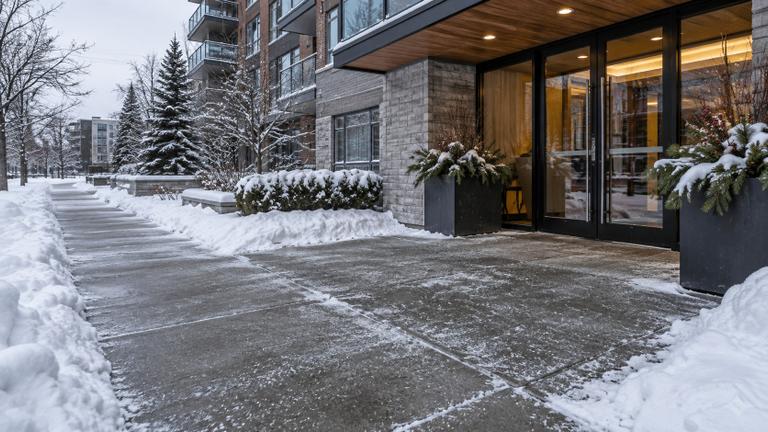
A tenant slips on the unshovelled front step, a delivery driver goes down in an icy parking lot, a visitor twists an ankle on a slick stairwell landing - and within days a demand letter lands on your desk. This guide breaks down landlord snow removal liability Canada-wide, covering the provincial occupiers' liability laws, municipal sidewalk bylaws, and documentation habits that determine whether a winter slip-and-fall becomes a quick insurance call or a costly lawsuit. Every province handles the details differently, but the underlying question is always the same: did the property manager take reasonable steps to keep the property safe.
Landlord Snow Removal Liability Canada: The Legal Basics
Every province and territory has its own occupiers' liability framework, but the core idea is consistent: whoever controls a property owes visitors a duty to take reasonable care to keep it safe, and that duty doesn't disappear the moment temperatures drop below zero. Ontario's Occupiers' Liability Act, and similar legislation in Alberta, British Columbia, and most other common law provinces, sets the standard as "reasonable care in all the circumstances," not a guarantee against every icy patch. Quebec works differently - liability flows from the Civil Code's general fault-based regime rather than a standalone occupiers' liability statute, but the practical result for a property manager is nearly identical: you're expected to act as a prudent operator would under the same conditions, not to achieve a perfectly ice-free site at all times.
For property managers, that duty attaches to anything you control: parking lots, common walkways, stairwells, entranceways, and shared laneways. What a tenant is responsible for on their own leased premises, the front step of a single-family rental, for instance, usually comes down to the lease. If the lease is silent or ambiguous about who clears the walk, courts tend to look at who actually had control over that area in practice, so vague lease language is a liability gap worth closing before winter, not after a fall.
Who Actually Carries the Risk
In a multi-unit building, the landlord or property manager almost always retains responsibility for common areas regardless of what any individual lease says. In single-family and duplex rentals, landlords can shift day-to-day shovelling to the tenant through a clear lease clause, but that doesn't eliminate the landlord's underlying duty if the arrangement was never realistic - for example, an elderly or physically limited tenant, or a property with a steep, high-traffic public walk.
Sidewalk Bylaws Add a Second Layer of Duty
Landlord snow removal liability doesn't stop at the property line. Most Canadian municipalities have a separate bylaw requiring the owner or occupier of a property to clear snow and ice from the public sidewalk abutting it within a set number of hours after a snowfall ends. These bylaws exist independently of occupiers' liability law: breaching one can mean a municipal fine even if nobody gets hurt, and complying with one doesn't automatically shield you from a civil claim if your clearing was late or inadequate.
The catch for property managers running portfolios across multiple cities is that the rules aren't standardized. Some municipalities clear public sidewalks themselves with municipal crews and only expect owners to manage on-site walkways and parking. Others push the sidewalk-clearing obligation entirely onto the adjacent property owner. Clearing deadlines, exemptions for certain property types, and enforcement approach all vary by city, so check the specific bylaw for every municipality where you manage property rather than assuming one building's rules apply everywhere.
What "Reasonable Care" Looks Like on the Ground
Reasonable care isn't a single action, it's a pattern that has to hold up under scrutiny months later. In practice, that means:
- Monitoring the forecast and pre-treating high-risk surfaces before a storm hits, not just reacting afterward.
- Clearing and salting or sanding within a defined trigger window once snowfall stops, written into your maintenance plan rather than left to judgment calls.
- Prioritizing entrances, stairs, ramps, and accessible parking stalls first, since that's where foot traffic and injury risk concentrate.
- Re-treating after freeze-thaw cycles, which regenerate ice long after the last snowfall and catch a lot of property managers off guard.
- Posting temporary caution signage during active melt-refreeze periods, especially near building entrances.
- Walking the property daily through the winter months, not only after a storm, since black ice can form on a clear day.
Skipping one of these occasionally probably won't sink a defence on its own. A pattern of gaps, no schedule, no contractor visits logged, no evidence anyone checked the lot for three days, is what turns a routine claim into a difficult one, and it's usually the deciding factor in how a court weighs landlord snow removal liability after the fact.
Getting the Contractor Relationship Right
Most property managers don't shovel lots themselves, they hire a snow and ice contractor, and the contract terms matter almost as much as the work itself. Getting this relationship right is central to managing landlord snow removal liability, since a poorly worded contract can leave a property manager exposed even when the contractor was technically on site. A solid winter maintenance agreement should include a certificate of insurance naming the property manager as an additional insured, an indemnification clause, a clearly defined snowfall trigger for callouts, and a response time commitment. Vague contracts that just say "clear as needed" create disputes exactly when you need clarity most: after an incident.
This is also where comparing options helps. Platforms like PlanaJob let property managers post a winter maintenance job and compare quotes from vetted contractors side by side, rather than defaulting to whoever answers the phone first. You can browse contractors and post a job directly at https://planajob.com/ca/property-managers, or set up an account at https://planajob.com/signup to manage the whole tender and contract process in one place. Contractors working out how to price risk into a winter maintenance contract, not just the labour hours, will find useful thinking on job costing and margins at https://constructionarbitrage.com.
Documentation Is Your Best Defence
If a claim does land, the property manager with a paper trail wins far more often than the one relying on memory. Insurers and courts want to see dated records: when the lot was salted, when the contractor arrived, what the weather was doing, and what the surface looked like before and after treatment. Timestamped photos are worth more than a written log alone.
This is precisely why PlanaJob's snow contracts include timestamped clearing logs as part of the job record. Every visit a contractor completes through the platform is logged with a time and, where relevant, photos, so if a slip-and-fall claim surfaces weeks or months later, you're not reconstructing the winter from memory. This kind of record is exactly what reduces landlord snow removal liability exposure when a claim actually gets tested. For more on building a defensible winter maintenance program, the PlanaJob blog at https://planajob.com/ca/blog has additional seasonal maintenance guides.
Insurance and Lease Fine Print
Adequate insurance is the last piece of managing landlord snow removal liability properly. Confirm your commercial general liability policy explicitly covers snow and ice claims and that limits are adequate for your portfolio size, since a single serious fall claim can exceed modest coverage quickly. If you're relying on a contractor's insurance to backstop your own, get the certificate directly from their insurer rather than a verbal assurance, and confirm it's current before the season starts, not after the first storm. On the lease side, spell out snow-clearing responsibility for any property where a tenant is expected to handle their own walk, and revisit that clause annually, since tenant turnover is a common reason a clear arrangement quietly stops working.
FAQ
Does a landlord have to clear snow from the public sidewalk in front of a rental property?
In most Canadian municipalities, yes - a municipal bylaw typically puts the responsibility on the property owner or occupier to clear the abutting public sidewalk within a set time after snowfall ends. The exact deadline and any exemptions vary by city, so check the bylaw specific to each municipality where you manage property rather than assuming a uniform national rule.
Can a tenant sue a landlord after a slip and fall on ice in a parking lot?
Yes. Common areas like parking lots, walkways, and stairwells are generally the landlord's or property manager's responsibility under provincial occupiers' liability law, and a tenant, visitor, or delivery driver injured there can bring a claim if reasonable care wasn't taken. This is one of the most common sources of landlord snow removal liability claims, and a documented winter maintenance schedule with contractor visit records is the main defence against them.
How long should winter maintenance and snow-clearing records be kept?
Keep clearing logs, contractor invoices, and weather records for at least the length of your province's limitation period for personal injury claims, which commonly runs around two years but can be longer in some circumstances, such as claims involving minors. Many property managers keep winter maintenance records for several years as a precaution, since claims are sometimes filed close to the limitation deadline.