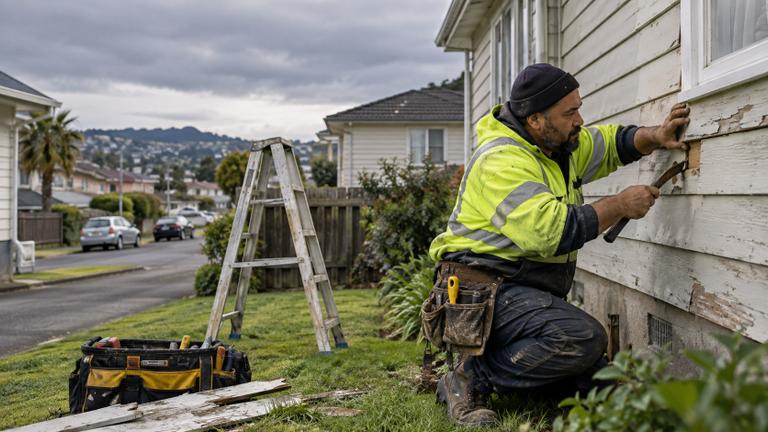
If you're chasing Kāinga Ora maintenance contractors work as a subbie, the first thing to get straight is that Kāinga Ora almost never signs a subcontractor directly. New Zealand's biggest landlord runs around 75,000 homes and spends well over $500 million a year keeping them warm, dry and compliant, but that spend flows through a five-partner network called Te Mahi Ngātahi, not through a Kāinga Ora procurement desk. Each of those five partners holds a patch of the country and runs its own subbie panel. Get on the wrong door and you'll wait months for a call back that was never coming. Here's how the five regions actually work and where a plumber, electrician, roofer or painter fits into each one.
Why Kāinga Ora Doesn't Hire Subbies Directly
Becoming one of the Kāinga Ora maintenance contractors on the ground starts with understanding the structure above you. Kāinga Ora's maintenance model is built on head contractors, not a central trades register. Under Te Mahi Ngātahi, each regional partner takes responsibility for urgent, responsive and planned maintenance across its patch, and Kāinga Ora holds them to service-level targets rather than managing individual jobs. Head-contractor-level opportunities do get advertised publicly on GETS (the government's tender site), but that's a door for firms bidding to become a regional partner, not for a sole-trader sparky looking for weekly call-outs.
What does flow down to every subcontractor, no matter which region you're in, is two baseline obligations. First, Kāinga Ora requires health and safety prequalification before any construction services get supplied on its properties, and schemes like SiteWise are commonly used to evidence this to both Kāinga Ora and its maintenance partners. Second, a Code of Conduct for Practices Onsite applies all the way down the chain, covering how you and your crew behave, dress and communicate in a tenanted home. Sort both before you approach a partner, not after.
Kāinga Ora Maintenance Contractors: The Five Regional Partners
Here's the region-by-region breakdown, based on Kāinga Ora's own current partner listings. Coverage does shift between contract cycles, so always cross-check the live map on Kāinga Ora's website before you put time into an application.
Downer - Multiple North Island Regions
Downer has delivered multi-trade maintenance to Kāinga Ora since 2010 and runs a 100 percent subcontractor delivery model across the North Island regions it holds. In practice that means Downer employs no tradespeople directly for this contract - it partners with more than 60 subcontractor delivery partners spanning plumbing, electrical, roofing, painting, glazing and general building. If Downer covers your area, the entry route is registering directly with their subcontractor programme rather than emailing a branch office and hoping.
Switched On Housing (Kā te Rama Switched On Group) - Lower North Island to Canterbury
Switched On Housing has maintained Kāinga Ora homes for more than 40 years and covers a wide band running from Tairāwhiti-Gisborne and Hawke's Bay down through Manawatū-Whanganui, Nelson-Marlborough and the West Coast, into Waitaha-Canterbury. It's one of the larger footprints of the five partners, which also means more regional depots and more entry points if you're a mobile trade willing to cover a couple of neighbouring districts.
DHMC Ltd - Otago, Southland and South Canterbury
DHMC Ltd grew out of a Dunedin-owned maintenance business into the main contractor covering most of the lower South Island, and is now part of the global facilities group BGIS. Usefully for subbies, DHMC runs a dedicated online subcontractor portal, which is about as close to a formal "how do I get in" door as this sector gets - worth bookmarking if you're a South Island trade.
The Remaining Two Partners - Upper North Island and Wellington
The last two of the five Kāinga Ora maintenance contractors split the upper North Island and greater Wellington between them, and these allocations are the ones most likely to change hands at contract renewal. Rather than naming a company today that could be out of contract by the time you read this, the reliable move is to check Kāinga Ora's own "Te Mahi Ngātahi Maintenance Partners" page, which lists current partners against a regional map. It takes two minutes and saves you chasing the wrong business card.
What You Need Before You Knock on Any Door
Every regional partner is answering to the same Kāinga Ora standards, so successful Kāinga Ora maintenance contractors turn up prequalified rather than hoping to sort it out once they're on the panel:
- Health and safety prequalification (SiteWise or an equivalent recognised scheme)
- Current public liability insurance at a level the partner specifies
- Trade licensing where it applies - registered electrician status, gasfitting certification, or Licensed Building Practitioner status for restricted building work
- References or a documented track record, ideally with rental or social housing maintenance
- Willingness to sign up to the Code of Conduct for Practices Onsite and whatever induction the partner runs
How Subbies Actually Get In, Step by Step
- Confirm which of the five regional partners covers your suburb or district using the current Kāinga Ora map, not last year's article or a mate's guess.
- Get your H&S prequalification, insurance and trade documentation sorted before you make contact - partners move fastest on applications that arrive complete.
- Apply through the partner's own channel, whether that's a formal subcontractor portal like DHMC's, a subcontractor delivery programme like Downer's, or a direct call to the regional depot.
- Expect to start on reactive or urgent call-outs before you're offered planned maintenance packages - partners want to see your response times and workmanship first.
- Once you're in, treat their KPIs as your KPIs. Response times, photo evidence of completed work and quality audits all roll up into the partner's own reporting to Kāinga Ora, so a slow subbie becomes the partner's problem fast.
Don't Build a Business on One Government Client
Government maintenance work is steady while it lasts, but panels get rebalanced, contracts get retendered, and a partner losing a region overnight can take your pipeline with it. It's worth reading how tradespeople elsewhere have handled the same over-reliance on a single big client over on Construction Arbitrage, which covers the business-strategy side of running a trade firm rather than just doing the work.
The practical fix is running a second pipeline alongside your Kāinga Ora relationship. Private landlords and property managers across New Zealand raise maintenance jobs and compare quotes from vetted contractors every day on platforms like PlanaJob, and that work doesn't disappear when a government contract changes hands. You can see how property managers already use the platform to source trades at planajob.com/nz/property-managers, and if you're ready to start picking up jobs directly, signing up as a contractor takes a few minutes at planajob.com/signup. There's more on building a resilient trades business, beyond any one client, over on the PlanaJob blog.
FAQ
Do I apply to Kāinga Ora directly for subcontractor work?
No. Kāinga Ora contracts with five regional maintenance partners under Te Mahi Ngātahi, and each partner manages its own panel of Kāinga Ora maintenance contractors and subbies. Head-contractor tenders appear on GETS, but individual trades apply to the regional partner, not to Kāinga Ora.
How long does prequalification take before I can start?
It depends on the H&S scheme you use and how complete your paperwork is when you submit it. Getting your public liability insurance, trade certifications and health and safety prequalification sorted in advance, rather than starting them after a partner expresses interest, is the single biggest thing that speeds this up.
Can I work for more than one Te Mahi Ngātahi partner at once?
Generally yes, if the partners cover different regions and you can genuinely service both without stretching your response times. There's no rule against it, but a partner that sees you missing urgent call-outs because you're stretched across two patches will simply move on to a subbie who isn't.