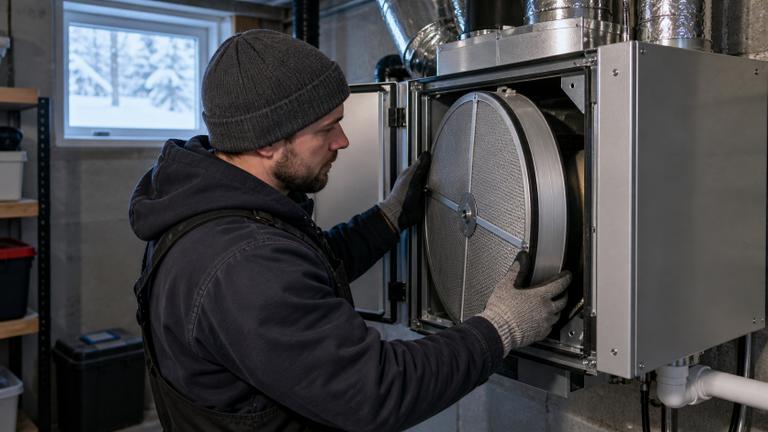
Heat recovery ventilators keep the air in a Canadian home breathable without throwing away the heat that keeps tenants comfortable through a Prairie winter or an Atlantic nor'easter. For property managers running multi-unit buildings from Halifax to Kelowna, HRV maintenance Canada landlords can't skip is one of those systems nobody notices until a tenant calls about condensation streaking the windows, a musty smell in the hallway, or an ice-crusted exhaust hood on the roof. Stay ahead of it and the unit runs quietly for a decade. Ignore it and you're looking at frozen cores, mouldy ducting, and a heating bill that keeps creeping up.
What an HRV Actually Does in a Canadian Home
A heat recovery ventilator swaps stale indoor air for fresh outdoor air while recovering most of the heat that would otherwise escape with it. That matters in Canada because building codes have pushed new construction toward tighter, more airtight envelopes for decades - great for energy bills, bad for indoor air quality if there's no mechanical way to bring in fresh air. The National Building Code of Canada, and provincial codes built on it, require mechanical ventilation in most new residential construction, which is why HRVs (and their cousin, the energy recovery ventilator, or ERV) are standard equipment in newer builds across Ontario, the Prairies, and Atlantic Canada.
The difference between the two matters for maintenance. An HRV transfers heat only, which suits drier, colder climates where you don't want extra humidity added back into the home. An ERV also transfers some moisture between the incoming and outgoing air streams, which is more common in humid coastal markets like Vancouver Island or southern Ontario summers. Either way, the core mechanical components - filters, a heat exchange core, intake and exhaust hoods, ducting, and a condensate drain - need the same basic upkeep.
Why HRV Maintenance Canada Winters Demand Is Different From a Furnace Tune-Up
A furnace mostly fails from neglect. An HRV fails from the climate itself. Cold air moving through the core during a deep freeze can cause frost buildup, which is why most residential units have a defrost cycle that periodically slows or reverses airflow to melt ice before it blocks the core entirely. When that defrost control fails, or when a unit is undersized for how cold a region actually gets, ice accumulates fast.
Exterior hoods are the other Canada-specific headache. Wall or roof-mounted intake and exhaust caps get buried in snowdrifts, capped with ice after freezing rain, or clogged with leaves in the fall before the first hard frost. A blocked hood chokes airflow just as effectively as a dirty filter, but it's outside, out of sight, and rarely on a tenant's radar. Any HRV maintenance Canada property managers plan for has to include a physical check of every exterior hood before winter sets in and again mid-season if the building sees heavy snow.
Core Maintenance Tasks Every Property Manager Should Track
Splitting the work between what a tenant can reasonably do and what needs a licensed contractor keeps this manageable across a portfolio. Most guides on HRV maintenance Canada property managers actually use boil down to these two lists.
Every 2-3 months, tenant-level
- Rinse or vacuum the washable filters (most residential HRVs use reusable foam or mesh filters rather than disposable ones).
- Wipe down the interior intake and exhaust grilles.
- Note any unusual noise, ice visible through an exterior hood, or a burning smell.
- Confirm the control panel is set to "on" or "auto," not switched off to save perceived energy costs.
Annually, licensed contractor
- Remove and clean the heat exchange core - most cores lift out for a rinse, but a clogged core often needs a proper degrease.
- Check and clear the condensate drain line, especially in units where the drain trap can dry out or freeze.
- Verify airflow balance between the supply and exhaust sides using a flow hood; an unbalanced system pressurizes or depressurizes the unit, pulling in unwanted air from attics or crawl spaces.
- Inspect ducting for disconnected joints, crushed flex duct, or insulation gaps in unconditioned spaces like attics.
- Test the defrost control and confirm exterior hoods are clear and properly screened against pests.
- Confirm the humidistat or dehumidistat setting still matches the season and occupancy.
Common HRV Problems in Rental Units - and What They're Telling You
- Ice crust on the exterior exhaust hood: usually a failed or miscalibrated defrost cycle, sometimes a unit that was never sized correctly for the climate zone.
- Condensation on windows or a musty smell returning within weeks of service: often a clogged core or a filter tenants haven't touched, cutting airflow well below what the unit needs to actually exchange the air.
- The unit runs constantly, or a tenant says they turned it off: some tenants assume shutting the HRV off saves money; it just lets humidity and stale air build up instead, and can trip mould complaints down the line.
- Standing water near a mechanical closet or basement HRV: almost always a blocked or frozen condensate drain, and worth checking before it damages flooring.
Building a Portfolio-Wide HRV Maintenance Schedule
Once you're managing more than a handful of doors, ad hoc scheduling stops working, and HRV maintenance Canada landlords handle at scale needs a real system. Fall gets crowded fast because every HVAC and ventilation contractor in the region is booking furnace and HRV checks at the same time, so staggering service dates across the portfolio - rather than booking everything in October - gets you better contractor availability and pricing. Keeping dated records of every HRV service call also matters if a tenant ever raises an indoor air quality or mould complaint; a documented annual service is a much stronger position than "we assume it was fine."
This is where comparing quotes from a few vetted contractors, rather than defaulting to whoever answered first, pays off over a full portfolio. A platform like PlanaJob lets property managers post the job once and see quotes from contractors who already have ventilation experience, rather than cold-calling around a city during peak season. If you're managing across multiple buildings, it's worth setting up an account before the fall rush hits rather than scrambling in November.
Contractors reading this from the other side of the job board might find it worth building HRV and ventilation servicing into a recurring revenue line rather than a one-off callout - the business-strategy side of that, from pricing maintenance contracts to scheduling recurring work efficiently, is covered well at constructionarbitrage.com.
Educating Tenants Without Relying on Them to Do the Work
Lease clauses that ask tenants to maintain the HRV filter sound reasonable on paper, but in practice most renters don't know the unit exists, let alone that it has a core that needs periodic cleaning separate from the filter. Move-in orientation sheets get ignored. The result: units that quietly lose efficiency for years because nobody ever opened the core.
The more reliable approach for most portfolios is treating HRV service the same way you treat furnace and smoke detector checks - scheduled, professional, and not dependent on tenant follow-through. Most tenants never clean the HRV core in the life of a tenancy, full stop, so the fix isn't better move-in paperwork - it's booking an annual professional service and taking the task off tenants' plates entirely. For more on building out a full seasonal maintenance calendar beyond just the HRV, the PlanaJob blog has additional breakdowns by system and season.
FAQ
How often should an HRV be serviced in a Canadian rental unit?
Filters should be rinsed every two to three months by whoever is in the unit, and a licensed contractor should clean the core, check the condensate drain, and verify airflow balance at least once a year - ideally in early fall, before the coldest stretch of the year puts the defrost cycle to work. That annual visit is really the backbone of HRV maintenance Canada winters make non-negotiable.
Can a landlord require tenants to maintain the HRV themselves?
Leases commonly ask tenants to handle basic filter cleaning, but core cleaning, balancing, and drain checks are mechanical work best left to a contractor. Relying on tenants for anything beyond filter rinsing tends to result in units that go years without real service.
What happens if an HRV isn't maintained in a cold Canadian climate?
Airflow drops as the core and filters clog, which shows up as window condensation, musty odours, and in worse cases mould growth. In winter, a neglected or poorly balanced unit is also more prone to frosting over at the exterior hood, which can shut down ventilation entirely until it's cleared or repaired.