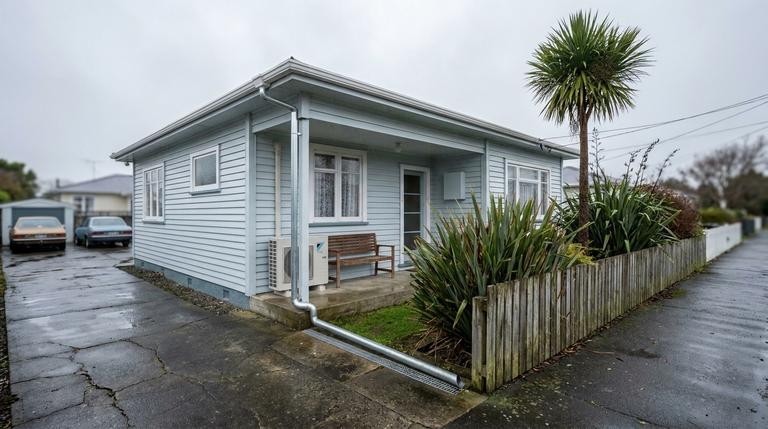
Every private rental in New Zealand has had to meet the healthy homes standards since 1 July 2025, which makes 2026 the first full year where non-compliance has nowhere left to hide. There is no staged deadline left to point at, no 120 day grace period after a new tenancy starts, and no realistic argument that you were still waiting on a tradie. For anyone running a portfolio, the healthy homes standards checklist NZ landlords need is no longer a project plan - it is an audit trail you have to be able to produce at short notice, property by property. Here is what that looks like standard by standard, including the details that quietly fail at the Tenancy Tribunal.
Where the healthy homes standards sit in 2026
The five standards come from the Residential Tenancies (Healthy Homes Standards) Regulations 2019: heating, insulation, ventilation, moisture ingress and drainage, and draught stopping. Boarding houses, Kainga Ora properties and registered community housing were brought in first, and the final deadline for all remaining private rentals landed on 1 July 2025.
Two practical consequences follow from that. First, the compliance status of a property is now a present-tense fact, not a plan with a date attached. Second, every new, varied or renewed tenancy agreement must carry a healthy homes compliance statement setting out the property's current level of compliance against each standard. A vague statement, or one that claims compliance you cannot evidence, is worse than no statement at all - it hands a tenant a written record to hold you to.
Failing to comply is an unlawful act. Tenants can apply to the Tenancy Tribunal, exemplary damages are available, and MBIE can take direct action against landlords with repeated or serious breaches. In most cases the cost is not the penalty, it is the work order plus the rent you lose while the property is unlettable.
The healthy homes standards checklist NZ property managers actually use
Run this per property, in this order. Insulation first is often the smarter sequence, because insulating a house reduces the heating capacity the property needs.
1. Heating
The main living room needs a fixed heater that can reach and maintain 18 degrees. The required capacity is not a judgement call: you must use the Tenancy Services heating assessment tool, which factors in room volume, glazing, orientation and whether the ceiling and walls are insulated.
- Open fires and unflued gas heaters do not count towards the standard at all.
- Electric heaters under 1.5kW cannot be used to meet the main living room requirement, and nothing portable qualifies.
- There are narrow allowances for qualifying fixed heaters installed before 1 July 2019 - check the criteria carefully before you replace a unit that may already be acceptable.
- Save the tool output as a dated PDF with the inputs visible. A heat pump that feels adequate is not evidence.
- Open-plan living areas catch people out. Measure the actual connected space, not just the lounge as drawn on an old floor plan.
2. Insulation
Ceiling and underfloor insulation must meet the standard for the property's climate zone. Ceilings generally require R2.9 through most of the North Island and R3.3 across the South Island and the central plateau, with R1.3 underfloor. Existing ceiling insulation installed before 1 July 2016 can remain if it is at least 120mm thick and still in reasonable condition.
Condition is where inspections fail. Look for batts pulled back for downlights and never reinstated, compression at the eaves, gaps around pipework, and damp or vermin damaged material. Take photos from inside the roof space at every inspection, not just the first one.
3. Ventilation
Every habitable room - bedrooms, living rooms, dining rooms and kitchens - needs an openable window, door or skylight with an openable area of at least 5 percent of the floor area. Kitchens and bathrooms need extractor fans venting to the outside: a minimum 150mm duct or 50 litres per second for kitchen rangehoods, and 120mm or 25 litres per second for bathrooms.
The single most common defect is a bathroom fan that discharges into the roof cavity rather than through a soffit or roof vent. It passes a glance from the doorway, fails the standard, and generates the mould complaint you will be reading about six months later.
4. Moisture ingress and drainage
The property needs efficient drainage for surface water, stormwater and groundwater: gutters, downpipes and drains that are intact, clear and discharging away from the building. Where there is an enclosed subfloor, a ground moisture barrier is required.
Check the subfloor yourself or send someone with a camera. Barriers get torn open by plumbers and electricians and then never mentioned. Ponding water, a musty smell through the floorboards or condensation on the underside of the flooring all point at the same failure.
5. Draught stopping
Unnecessary gaps and holes in walls, ceilings, windows, floors and doors that cause noticeable draughts must be blocked. Unused open fireplaces must be blocked unless the tenant agrees in writing to keep them open - and that agreement belongs on file, not in a text thread.
Older timber villas and sash windows are the usual offenders, along with gaps around pipe penetrations under sinks and behind old wall heaters.
Compliance statements and the records behind them
A healthy homes standards checklist is only as good as the evidence attached to it. For each property, keep one folder containing the heating assessment tool output, the insulation installer's statement and roof space photos, extractor fan specifications or installation invoices, subfloor and barrier photos, and dated before and after images of any remedial work.
The test is simple: if a tenant filed tomorrow, could you produce the file within ten minutes? If not, you have a belief about compliance rather than proof of it. Portfolio-level guidance on structuring this sits on our resources for NZ property managers, and we cover related tenancy obligations across the PlanaJob blog.
Exemptions are narrow, and they still need paperwork
Exemptions exist but they are specific and mostly time-limited. They cover situations such as a property due to be demolished or substantially rebuilt, cases where insulation or heating cannot reasonably be installed because of the building's design or physical constraints, and certain apartments with habitable space above or below. Cost alone is not an exemption. Where you rely on one, record the reason, the supporting evidence and the date, and set a diary reminder for when it lapses.
Running healthy homes work across a portfolio
One-off scrambles are expensive. A standing cycle is not.
- Audit every property once a year against all five standards, on a fixed calendar, not on complaint.
- Re-inspect at every change of tenancy, because that is when the compliance statement is issued and when defects surface.
- Bundle remedial work by trade and suburb. Five subfloor barriers booked together price very differently from five booked separately.
- Schedule heating and insulation work in late summer and autumn. Everyone chases installers in June.
- Re-run the heating tool after insulation upgrades - required capacity often drops enough to avoid an oversized unit.
Sourcing the trades is usually the bottleneck. Platforms like PlanaJob let property managers raise a job once and compare quotes from vetted contractors rather than ringing round, which matters most when you need a ground moisture barrier and three extractor fans done before a tenancy starts. Contractors reading this should note that healthy homes work is repeatable, high frequency revenue: there is useful writing on packaging compliance work as a recurring service line at Construction Arbitrage, and trades who work across markets swap pricing and scheduling notes in communities like Contractor Club.
If you want assessments and remedial work handled through one channel, you can set up a PlanaJob account and book Healthy Homes assessments and follow-up jobs through our vetted contractor network, with quotes and completion records kept against each property.
FAQ
Do I need a certified assessor to sign off healthy homes compliance?
No. The regulations require the property to comply and require you to hold evidence of it, not that a particular person certifies it. That said, an independent assessment report is strong evidence, and for larger portfolios it is usually cheaper than discovering a defect at a Tribunal hearing.
Does installing a new heat pump automatically meet the heating standard?
Not on its own. The heater must be fixed, must be in the main living room, and must have at least the capacity the Tenancy Services heating assessment tool calculates for that specific room. An undersized unit in a large open-plan space is a common and expensive miss.
What happens if a tenant complains that the property is not compliant?
They can apply to the Tenancy Tribunal, which can order the work done and award exemplary damages for the unlawful act, and MBIE can pursue landlords directly in serious cases. Responding quickly with a dated evidence file and a booked contractor is the difference between a resolved issue and an order against you.