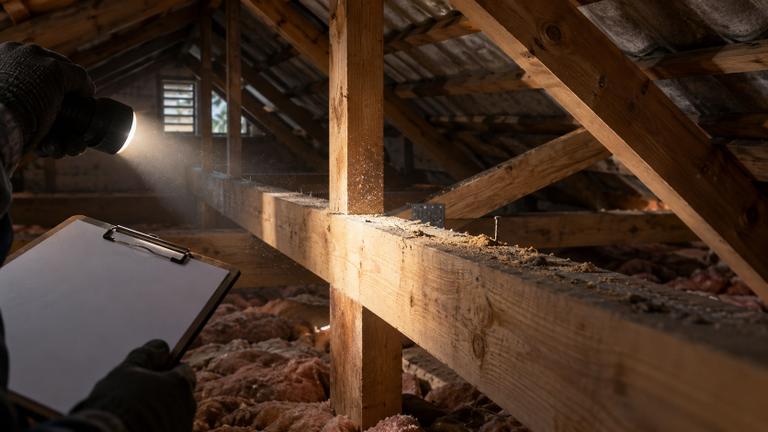
If you manage property along the Cape Peninsula, the Garden Route or the KZN North Coast, you have probably watched a transfer grind to a halt over a beetle certificate. South Africa has no statute that makes one compulsory, which surprises most owners the first time they hear it. Yet the beetle certificate South Africa buyers and banks ask for is still one of the most common reasons a coastal sale misses its registration date, because the requirement lives in the sale agreement and the bond conditions rather than in the law. Here is what it covers, who pays, and how to stop it stalling your transfer.
Beetle certificate South Africa: what the law actually says
There is no national legislation requiring a wood borer inspection before a property transfers. Compare that with the certificates that genuinely are compulsory:
- Electrical certificate of compliance, required under the electrical installation regulations of the Occupational Health and Safety Act for every transfer, countrywide.
- Electric fence system certificate, required wherever an electric fence is installed.
- Gas certificate of conformity, required for any fixed gas installation and issued by an SAQCC Gas registered installer.
- Plumbing certificate, required by the City of Cape Town under its water by-law, and not a national requirement.
- Beetle certificate, required by nobody in law, and by almost everybody in practice along the coast.
The beetle certificate became standard in the Western Cape, Eastern Cape and KwaZulu-Natal because coastal conditions favour wood destroying insects. Agents wrote the clause into their standard offer to purchase forms, banks began listing it as a bond condition on coastal security, and the custom hardened. Inland, across most of Gauteng, the Free State and Limpopo, the clause usually is not there at all.
That distinction matters, because you are not enforcing a regulation. You are enforcing a term of a contract somebody signed, and contract terms are negotiable before signature and binding afterwards.
What the inspector is actually looking for
The insects that matter on the coast
A registered inspector is checking for the borers that thrive in humid, salt-heavy air: the Italian beetle, which goes for pine and is a Western Cape speciality, the common furniture beetle, powder post beetles in hardwood sapwood, and longhorn borers. The West Indian drywood termite often turns up in the same inspection, and although it is a termite rather than a beetle, it is usually dealt with under the same clause.
Older coastal stock is vulnerable for unglamorous reasons: softwood roof trusses, poor roof ventilation, decades of damp cycling, and roof voids nobody has entered since the last re-roof. A 1960s Muizenberg semi and a 2018 Umhlanga apartment are not the same risk and should not be priced the same way.
What is in scope, and what is not
The certificate covers accessible timber forming part of the building: roof trusses and purlins, wooden floors, skirtings, door and window frames, built-in cupboards, staircases and exposed beams.
It does not cover loose furniture, timber the inspector could not physically reach, subfloor areas sealed under tiles or fitted carpets, or damp and dry rot, which is a different problem needing a different contractor. Read the exclusions paragraph on the report. That paragraph, not the certificate on the front page, is where the disputes start.
Who pays, and the clause that decides it
Almost every offer to purchase puts the inspection and any resulting treatment on the seller. The detail is where the money moves:
- The cost cap. Many clauses cap the seller's treatment liability at a stated rand amount. Above the cap, the parties renegotiate or the sale can fall away. If you act for a seller with a large old roof, negotiate that number before signature.
- The validity period. There is no statutory expiry, unlike the two year life of an electrical COC. The agreement sets it, usually a few months, and a certificate that lapses before registration is worthless.
- Who appoints the inspector. If the buyer appoints, expect a thorough report. If the seller appoints, expect the buyer's attorney to scrutinise it.
Then there is disclosure. The Property Practitioners Act requires a mandatory disclosure form on sales handled through a property practitioner, signed by both parties. A known infestation belongs on it. The voetstoots clause protects a seller against latent defects they did not know about; it does not protect a seller who knew about borer in the roof and stayed quiet. If you manage a building and there is a treatment invoice in the file from three years ago, that is knowledge, and it is yours to disclose.
Sectional title: the part that catches trustees
Here is the scenario that makes managing agents nervous. A unit sells, the inspector climbs into the roof void, and finds active borer in the trusses. Those trusses are common property under the Sectional Titles Schemes Management Act. The seller cannot treat them because they do not own them, and the body corporate now has a problem with a transfer date attached to it.
- The cost sits with the body corporate, funded from the maintenance reserve or a special levy, not the selling owner's pocket.
- Trustees need a resolution, and a substantial spend may require an owners' meeting depending on the scheme rules.
- Timber inside the section, such as built-in cupboards and internal doors, remains the owner's, so one inspection can produce two bills with two payers.
- Borer in one roof void rarely stops at one roof void. Inspect the whole scheme.
The fix is to stop treating borer risk as a conveyancing event. Coastal schemes should build roof timber inspection into the ten year maintenance, repair and replacement plan trustees already have to prepare, on a cycle rather than in a crisis. Planned programmes like this are something we cover in detail for South African property managers.
A process that keeps the transfer moving
- Read the clause first. Scope, cap, validity, appointing party. Five minutes here saves a fortnight later.
- Book the inspection when the offer is accepted, not when the conveyancer chases it. Treatment plus re-inspection takes time you will not have at week ten.
- Use a pest control operator registered under Act 36 of 1947. Ask for the registration number and check it. Membership of the South African Pest Control Association is a further useful filter.
- Insist on a written report with photographs and a stated list of what was not accessible.
- Separate inspection from treatment when the quote is large. The inspector is usually also the treatment contractor, which is normal but not ideal once the number climbs. Compliance work is priced on risk and liability rather than hours, and it helps to understand how trade businesses build margin before you argue about a figure.
- Check occupancy requirements. Fumigation may mean vacating the building, and tenants need the notice your lease specifies.
- Diarise the expiry against the realistic registration date, not the optimistic one.
One more practical point: pest control firms change hands often, and the company that issued a certificate five years ago may be trading under new ownership today. There is an active market in trade businesses being bought and sold, so verify the current registration rather than trusting the letterhead.
Getting the right inspector quickly is most of the battle. Platforms like PlanaJob let property managers compare quotes from vetted contractors in one place, so you are not phoning around Kalk Bay on a Friday afternoon hoping somebody can get into a roof by Monday. Sign up and line up a vetted entomological inspector before your transfer stalls, rather than after.
So do you really need one?
If the sale agreement or the bond condition says so, yes, and there is no argument to be had. If it does not, use judgement. A coastal building with a timber roof structure, timber floors or any structure older than about twenty years is worth inspecting whether or not anyone demanded it, because the inspection cost is trivial against replacing a roof. An inland flat on a concrete slab with steel trusses is not.
Buyers should ask for one on the coast even where local custom is thin. Sellers should negotiate the cap, not the principle. Managing agents should be inspecting on a schedule, so that no transfer ever hinges on what someone finds in a roof void with three weeks to go. More on coastal compliance planning on the PlanaJob blog.
FAQ
Is a beetle certificate a legal requirement in South Africa?
No. Unlike the electrical certificate of compliance, no national law requires one. It becomes binding when the offer to purchase includes a clause requiring it, or when the buyer's bank makes it a bond condition, which is standard practice in the coastal Western Cape, Eastern Cape and KwaZulu-Natal.
How long is a beetle certificate valid for?
There is no statutory validity period. The sale agreement sets it, usually a matter of months from the date of issue. Check the wording against your expected registration date, because a lapsed certificate means a fresh inspection and a fresh delay.
Who pays if the inspection finds an infestation?
In most standard agreements the seller pays for both the inspection and the treatment, often up to a capped amount. In a sectional title scheme the position splits: timber that is common property, most importantly roof trusses, is the body corporate's cost, while timber inside the section falls to the owner.