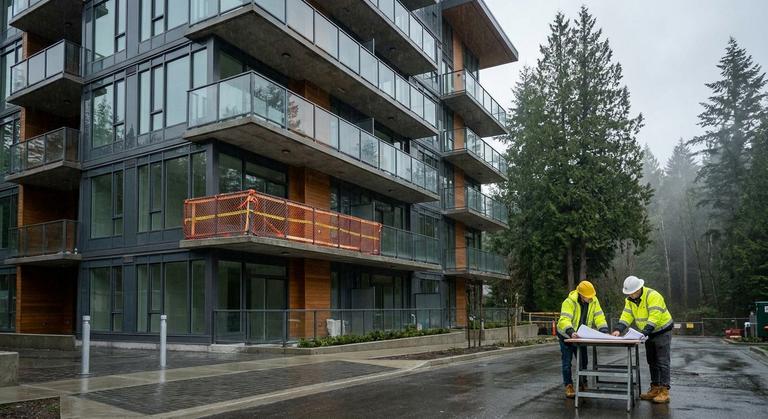
Ask ten BC strata councils where the strata corporation's duty to repair ends and the owner's begins, and you will get ten slightly different answers - usually based on what the last council did rather than what the documents actually say. Getting strata maintenance responsibilities BC councils operate under right is not a technicality. It decides who funds the repair, who signs the contract, whose insurer responds, and whether the corporation ends up defending a claim at the Civil Resolution Tribunal. This guide sets out the decision path a property manager can run in about twenty minutes, then how to scope and tender the work once the responsibility question is settled.
How strata maintenance responsibilities in BC are decided
Section 72 of the Strata Property Act is the anchor: the strata corporation must repair and maintain common property and common assets. Everything else flows from three documents, read in this order.
- The registered bylaws. Pull them from the Land Title Office, not the binder in the management office. Bylaw amendments only take effect once filed, and plenty of corporations are quietly operating on a set that passed at an AGM three years ago and was never registered.
- The strata plan. Under section 68, unless the plan shows otherwise, the boundary between a strata lot and common property is the midpoint of the structural portion of the wall, floor or ceiling. That single line settles most in-suite arguments before they start.
- The limited common property designations. LCP is either drawn on the strata plan, designated by the owner developer, or created later by a 3/4 vote resolution. If you cannot point to one of those three sources, it is not LCP, whatever the parking sign says.
If the corporation has not adopted its own bylaws, the Standard Bylaws in the Act apply. Standard Bylaw 8 is the workhorse: the corporation must repair and maintain common assets, common property that is not designated LCP, and - critically - the structure and exterior of the building, chimneys, stairs, balconies and other things attached to the exterior, doors, windows and skylights on the exterior or fronting common property, and fences, railings and similar structures that enclose patios, balconies and yards. Standard Bylaw 2 puts the mirror duty on owners for their own strata lot.
What almost always sits with the corporation
Roof assemblies, cladding and the wider building envelope, perimeter drains, corridors, elevators, boilers, the parkade slab, exterior doors and windows, balcony membranes and guardrails, and any pipe or duct running through common property serving more than one lot. Councils sometimes try to hand balcony membranes to owners because the owner is the only one who uses the balcony. The Act and regulations limit how far a bylaw can push structural and exterior items onto owners, so before drafting anything that shifts a duty, get it reviewed by strata counsel rather than copying a bylaw from another building.
What sits inside the strata lot
Interior finishes, cabinetry, owner-installed flooring, in-suite fixtures and appliances, and branch services that serve only that lot. Hot water tanks inside a strata lot are usually the owner's, but confirm the tank is not a shared or common asset in an older conversion before you send that letter. Anything an owner added under an alteration agreement - a mini-split head, a hardwood upgrade, a glazed-in patio - normally stays with that owner and their successors in title, which is exactly why those agreements need to be signed, filed and traceable years later.
Limited common property is where most disputes start
LCP is common property reserved for the exclusive use of one or more strata lots: balconies, patios, decks, yards, parking stalls, storage lockers. Under Standard Bylaw 8, the corporation repairs and maintains LCP only to the extent that the work ordinarily happens less often than once a year. In practice that draws a workable line. Sweeping the balcony, clearing the deck drain of fir needles and keeping the patio free of stored junk fall to the owner. Recoating the membrane, replacing the railing, repairing the slab beneath it fall to the corporation.
Two habits save real money here. First, keep the LCP schedule for parking and storage accurate and reflected on the Form B Information Certificate, because stall disputes surface at the worst possible moment during a sale. Second, when the corporation does LCP work, notify the affected owners in writing about what will be removed - planters, tile, screens, satellite dishes - and who bears the cost of putting it back.
The grey zones worth resolving before they become claims
These are the recurring items where strata maintenance responsibilities in BC blur, and where a written council position saves months of back-and-forth:
- Windows and patio doors. Frames, seals and glazing usually sit with the corporation. Broken hardware, screens and blinds are commonly bylaw-shifted to owners. Check which side your bylaws land on and publish it.
- In-suite water escape. Separate the source from the damage. The corporation typically insures the building and original fixtures, so its policy often responds to the drywall and flooring even when the leak began in a strata lot. Section 158 allows the corporation to recover the deductible from an owner who is responsible for the loss.
- Plumbing stacks versus branch lines. The vertical stack is common property; the horizontal run serving one suite usually is not. Have the plumber mark which is which on a plan copy during the first callout.
- Dryer vents and in-suite ventilation. Ducting inside common property walls is the corporation's; lint buildup at the appliance is the owner's. Building-wide vent cleaning belongs in the maintenance calendar, not the complaint queue.
- Owner alterations that fail. A leaking glazed-in balcony installed by an owner in 2011 is not a common property problem just because it touches the envelope.
For managers running several buildings, the practical fix is a one-page responsibility matrix per strata, signed off by council and issued to owners at the AGM. Our Canadian property manager resources cover how to build one that holds up when an owner challenges it.
Who pays, and out of which pot
Once responsibility lands with the corporation, funding follows the Act. Routine repair and maintenance comes from the operating fund if it appears in the approved budget. Contingency Reserve Fund spending generally requires a 3/4 vote, and larger renewals typically go to a special levy under section 108. Section 98 allows unapproved expenditures where the work is necessary to ensure safety or prevent significant loss or damage, which is the provision to lean on for a failed boiler in February - not for a deferred re-roof you have known about for three years.
Depreciation reports carry more weight than they used to. The waiver route was removed, and strata corporations of five or more lots are on a five-year cycle with first-report deadlines phased by region. Confirm your corporation's specific deadline with counsel or your report provider, then use the report as the spine of a five-year maintenance plan rather than a document that gets tabled and forgotten.
Turning a responsibility call into a clean scope of work
A correct legal answer still fails if the tender is vague. Every request for quotation on strata work should carry:
- The exact scope with quantities and locations referenced to the strata plan, plus a stated exclusion list.
- Confirmation of who is designated prime contractor for WorkSafeBC purposes on a multi-employer site, in writing.
- A current WorkSafeBC clearance letter and proof of liability coverage naming the strata corporation.
- Permit responsibility spelled out: gas and electrical work through the applicable authority, and a hazardous materials survey before any demolition or renovation in older buildings, with abatement by a properly licensed contractor.
- Access arrangements, remembering that entry to a strata lot generally requires 48 hours written notice stating the reason, except in an emergency.
- Warranty terms, deficiency holdback and a realistic schedule with weather contingency for envelope work.
Pricing variance on strata jobs is usually about mobilization, access and phasing rather than labour rates, a point covered well in the pricing breakdowns at Construction Arbitrage. It is also worth knowing whether your long-standing contractor is nearing retirement or a sale, because ownership changes quietly reset service levels; the market commentary at Contractor Exit is a useful primer on how those transitions play out.
Platforms like PlanaJob let property managers post a defined scope and compare quotes from vetted contractors side by side, which keeps the comparison honest instead of anchoring on whoever answered the phone first.
Bring the same discipline to procurement
Once you have settled strata maintenance responsibilities and funding, the remaining risk is procurement drift: one quote, no scope, and a council decision made under pressure. Strata councils use PlanaJob to get three vetted quotes without chasing contractors, with the scope, documents and correspondence held in one place for the minute book. You can create an account in a few minutes and post your first job the same day, and there are more Canadian compliance and procurement guides on the PlanaJob blog.
FAQ
Who pays for a leaking window in a BC strata?
Under the Standard Bylaws, exterior windows are the strata corporation's responsibility, including frames, seals and glazing. Registered bylaws can shift limited items such as screens or hardware to owners, so check the filed bylaws first. Damage caused by an owner's alteration or neglect is a separate question and may be recoverable from that owner.
Can a bylaw make owners responsible for their own balconies?
A bylaw can allocate some limited common property upkeep to owners, but the Act and regulations restrict how much structural and exterior work can be transferred, and balcony assemblies typically stay with the corporation. Get any such bylaw drafted by strata counsel and registered at the Land Title Office before relying on it.
What happens if the strata corporation refuses to do a repair it owns?
An owner can request the work in writing, escalate to a hearing before council, and then file a claim with the Civil Resolution Tribunal. Tribunal decisions regularly turn on whether the corporation acted reasonably and documented its reasoning, so record the inspection findings, the advice received and the decision made at every step.